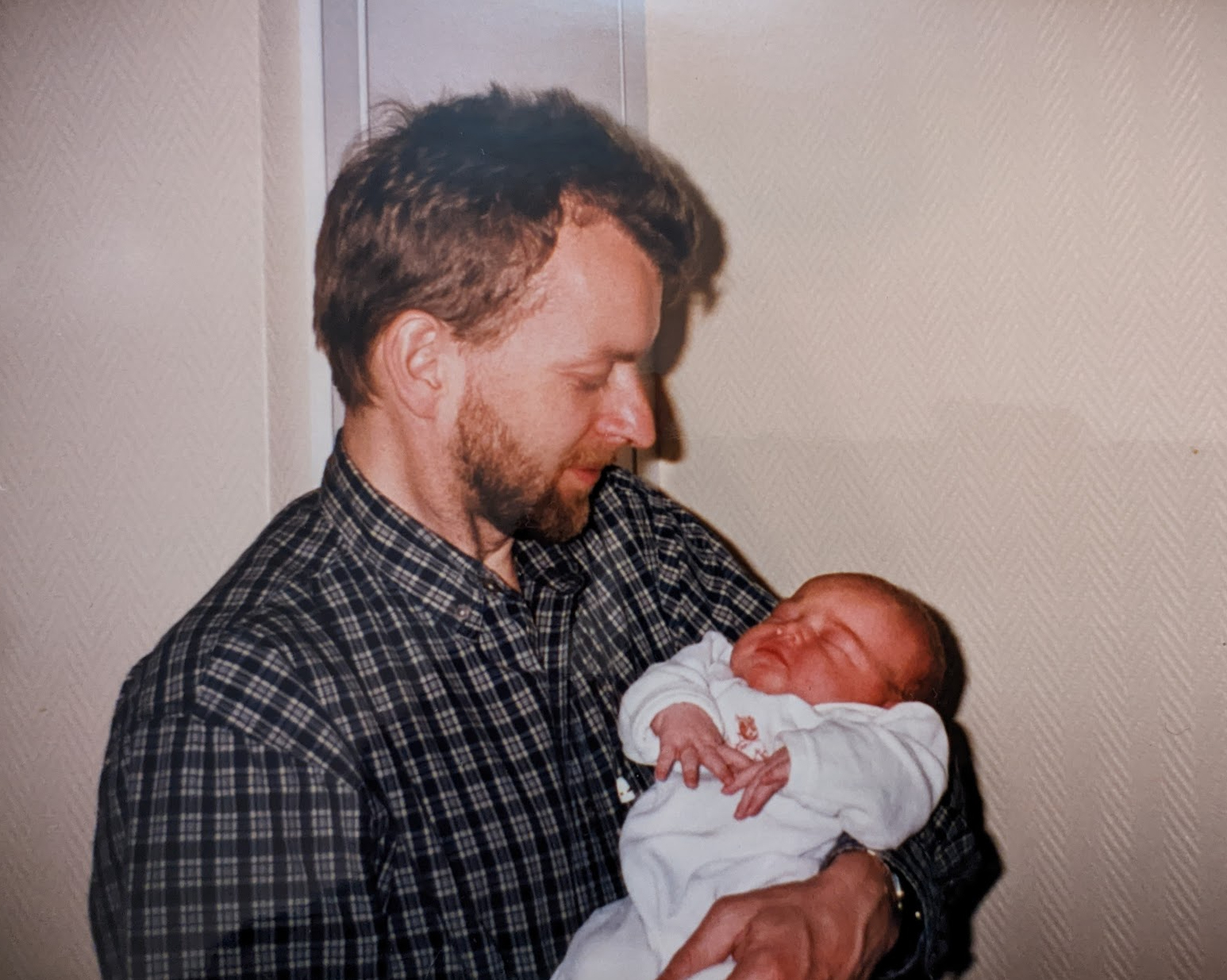

My name is Soline Van de Moortele, and I would like to personally thank you for visiting my blog and reading my posts. I am dedicated to creating a series of blog posts on my personal experience with losing my father at 22, as well as provide a platform for other people to share their experience with grief. If you would like to contribute, please email : agrievinggirlblog@gmail.com
Realizing that grief goes far beyond death in life is a difficult realizaton to have.
What is tricky about grief when you lose someone you love is that you cannot confront the object of your grief directly, as they are gone. Your world becomes full of the person’s absence, but the very phrase hints to the paradoxical nature of such a reality. And that absence is heavy with suffocating.
This new reality in some respects will be temporary. I have already felt some ways in which certain aspects of the absence don’t hit as much – namely, the disbelief that this could really be the case for the rest of my life, that for something completely beyond my control, in my case cancer, every aspect of my life could change. But what has replaced the more immediate, suffocating and anxiety-inducing moments of actual disbelief (what would be categorized under the phase of ‘denial’), has now become more of a disbelief geared towards my future.
One of the crucial points to the process of grieving, all the more intense when you are grieving the loss of someone who was constitutive to your daily life (parent, child, friend, significant other, roommate, pet, the list goes one), is the grieving of your past life. This is something which has been hitting me all the more acutely in the past weeks.
On a personal level, which I think those grieving in their younger years, and especially if you have also spent part of your youth or early adulthood with the COVID-19 pandemic, will understand, is the feeling that I have been robbed of the innocence and unquestioned trust I had in life. I am no longer able to feel a horizon of possibilities ahead of me, no longer able to enjoy my academic life as I briefly had been able to pre-pandemic, and no longer able to have any kind of light-hearted, pure joy.
Of course, my situation in the face of this grief is much better materially speaking than many facing the same kind of situation. I have financial and emotional support, a stable family, friends I love, and I seek to remind myself of this incredible privilege. Yet I think there is something there that can be shared: the promise we were given of some kind of youth, that period of self-discovery and the opening up of a horizon of possibilities, is ripped away when we are faced with the cruelty of life.
With COVID-19, I kept telling myself that eventually, things would open up again, life would seem ‘normal’ again, this was temporary. My instinct tells me that many people, including myself, eventually had the feeling that there would never be a new normal. Just consider the digitalization of our lives which has not reverted since: the crisis of authenticity, destructive nature of our addiction (both on an individual and collective level) to social media, hyperconsumerist capitalism was all the more exposed during the pandemic, and we now, in some form or another, are grieving life as it was before.
I feel this all the more with my father’s death. My father was the person who understood me the most, with whom I could share my existential crises with, who I could constantly talk to about all the things I was doing on a philosophical level. He deeply enriched my life and I feel that I have lost a part of myself with his passing, and as a result I doubt whether I will ever feel whole again.
I am now trying to deal with what has emerged as a multiplicity of forms of grief. I grieve my parent, who was also my best friend and mentor, and I grieve my past life, which was filled with an optimism and excitement which was sustained by my unconscious belief that my parents would always be there for me, no matter what would happen. Without this same foundation I find myself having to do what I think is probably just part of becoming an adult, creating your own foundations and learning to distance yourself from those you took for granted.
I’m going to be honest though, this last part is so, so hard. So often I have an instinct to call my father after receiving an award or having an existential crisis or just wanting to be comforted by the person who was my rock and my hero growing up. In these moments, which are specific to him, I must find ways to connect with him alternatively. This may be through journaling, meditating, or straight up sobbing (I will write a later post on ways I have found effective to reconnect with a past loved one).
But I cannot try to replace what he was to me, and so even in my alternate forms of connection, I feel silence. In this way I honor him, painful as it may be.
To come back to the initial point of this article, I mainly want to emphasize that it is normal to feel like your grief is not just about the person, but about your entire life. And this is not a selfish thought (something I struggle not to feel everyday). Indeed, we are social, relational beings, and losing a connection or a person who was part of our life means losing a part of what made us who we are. And if you are young, this is especially pertinent as you are not just losing a connection, but the very foundation to your life.
I don’t want to draw too bleak of a picture, however. These things are part of the hard reality of grief, that is undeniable. Yet the realization that you are grieving not only the loss of the person itself but a whole heck of a lot of other things has been helpful, though torturous, for myself. And as with all forms of grief what matters not is how much you are able to intellectualize your grief, although this is indeed helpful to a certain extent. What is most important is to let yourself feel the grief in its entirety, without getting lost in the vicious cycle of desperation and dread it can provoke – which may lead to prolonged grief – and finding that balance is something I think takes quite a long time.
I am not of the patient kind, so this whole process is making me learn something new. And as we grieve our past lives, let us rejoice in the love and endearing memories we have of and with the person now lost, and let us use these to motivate the transformation of our new realities into something beautiful and all the more meaningful. Let us sustain their being through the lives we continue to live, somehow.
Looking forward to writing soon.
With love,
Soline

 A Grieving Girl's Blog
Leave a comment