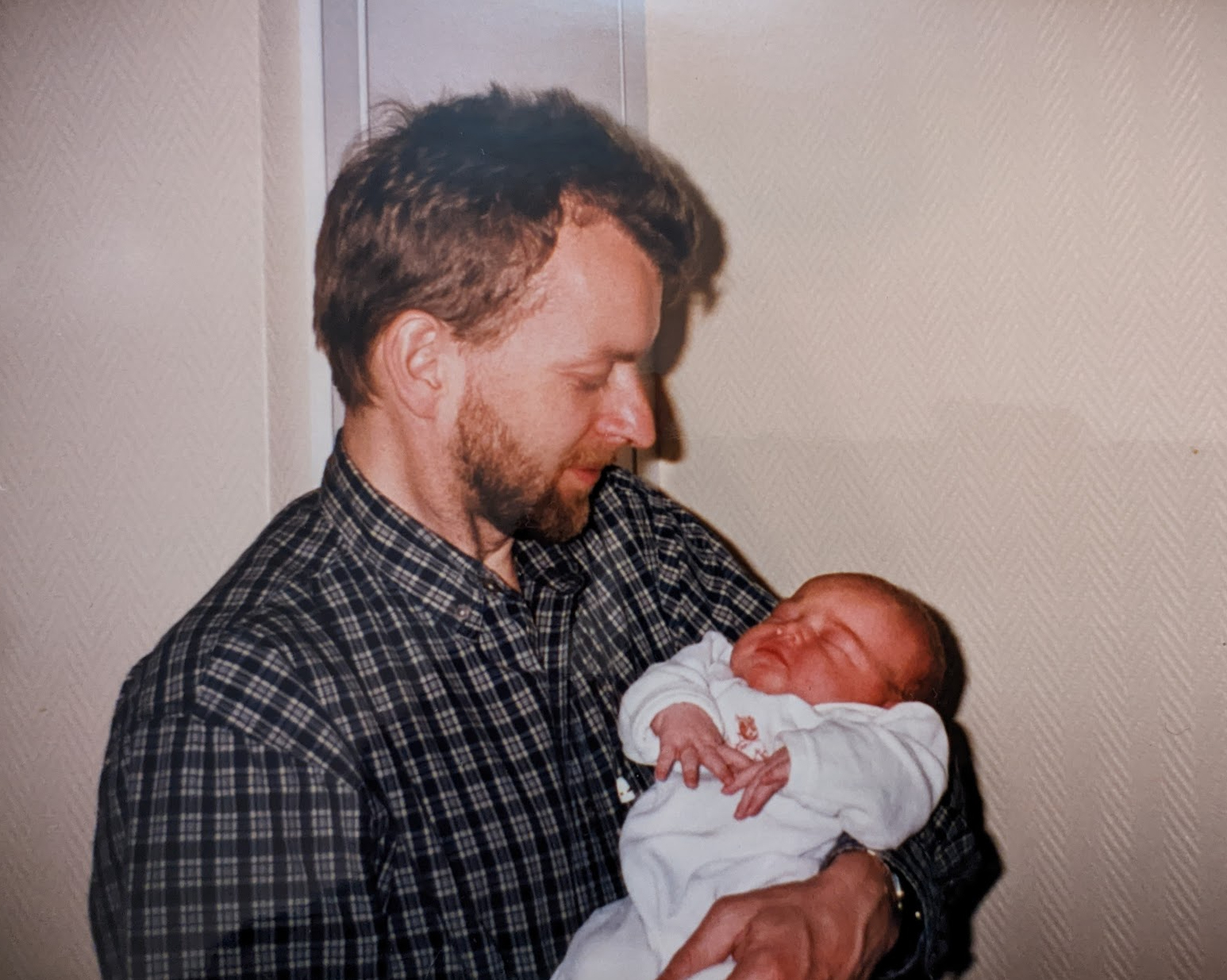

My name is Soline Van de Moortele, and I would like to personally thank you for visiting my blog and reading my posts. I am dedicated to creating a series of blog posts on my personal experience with losing my father at 22, as well as provide a platform for other people to share their experience with grief. If you would like to contribute, please follow this link or email : agrievinggirlblog@gmail.com
This post will discuss the worst effects of grief and how they feel when they hit on certain days. Towards the bottom of the post, I offer some advice that has helped me navigate these tortuous moments, although I am still in the process of learning to live with them.
My Experience with the Ugly Days of Grief
Yesterday morning as I opened my eyes I immediately felt the horrendous weight of grief, death, and loss. This weight pulled me down and erased my desire to face the reality of a world without my father. I knew it would be a terrible day.
And indeed, it was. I spent my 45-minute therapy session sobbing and fighting the impending panic attack which was making my breathing uncontrollable. A constant stream of tears moved down my eyes as I was on the bus or walking in public. Flashbacks of my dad lingered in my mind no matter how much I tried to distract myself. Intrusive thoughts became vicious cycles and I felt bound to a death I regret so deeply.
It has been over four months since my father’s passing yet when these days come up, they are so violently and heart-wrenching that it feels as though no time has gone by, that I have not made any progress in my experience of grief, and that I am destined to spend my twenties suffering because of an injustice I had no control over. Such is life, I suppose.
This is the ugly side of grief. When the dissociation kicks in, when you are unable to make any coherent conversation, when you can no longer find any meaning in the things that at one time brought you so much. This is normal, I reassure myself, but it doesn’t take away from the pain I experience during the moments.
Up until now, I have found no magic formula to kick myself out of this state. I have noticed that there is something cyclical about it. There tends to be five days during which I am doing fine and not sobbing so much about the loss, five days where I feel at least a little bit of excitement about life and I am active and busy, and then it crashes, and I find myself in the days about which I am writing, the ugly, horrible, and despairing days.
Phases of Grief
I have also noticed that the worst phases of grief also tend to come around the same time when I have more overall stress in my life, namely from school deadlines. Let’s be honest, the current social configuration of the world I live in leaves absolutely no room for grief. The more I have to do, the more I repress, the worse my emotional state becomes.
On days like yesterday, I feel myself drowning and suffocating in the thoughts I have. My father was one of my favorite people in this world… If the meaning and joy of life comes from the people we love who surround us, what worth can life have after such a tragedy?
I feel trapped in a body forced to live through something it had no control over. The thoughts go through the disbelief that I could lose such an extraordinary father so young, that I could ever find happiness again, that this is really the life I have to live. One without my beloved father.
And although I have been able to learn to better function over the course of these past months (last month my concentration levels were so low that I could barely read or go to class – now I am writing essays and reading intricate philosophical texts again, albeit with some difficulty), I realize that learning to function and going through grief are two distinct things, even if they have some connection to one another.
The saying that ‘the pain doesn’t go away, you just learn to live with it’ has never felt more pertinent.
Days like that also delve me into such a deep isolation and feeling of instability. Heightened anxiety and paranoia of the future are common symptoms of people experiencing grief. I couldn’t prevent this death which has dominated so much of my life from happening, so how can I trust anything to be in my control ever again?
Days like This, You Probably Feel More Alone than Ever
If you experience those kinds of symptoms, you likely will also feel a torturous solitude, almost feeling trapped in a body experiencing something you don’t want to experience, faced with the tragic reality that the only person who could comfort you in your grief is the very person causing it by virtue of their death.
Even when I seek affection or comfort from friends, family, or my partner when I feel that solitude, it sometimes only worsens the feeling. I am left reminded that one could ever replace the love he gave to me.
These words are indeed dreary, but they are just part of what it is to grieve. No amount of comforting words or phrases can remedy the pain I feel of losing my father at 22. If they could, then there would be no need to grieve.
I am still learning to work through the worst of the symptoms. Such a working through takes time and patience, something particularly difficult to reconcile with such a fast-paced and disconnected world.
Any advice I would give? Indeed, there are two tips I can provide which have helped me (to some degree), with days like these.
Get Out of Bed, Walk Around, and Eat – then decide if you will just cancel the rest of the day
Whenever I can, I tend to cancel whatever activities I had planned on days when I wake up feeling like absolute sh*t. This is because, to a certain degree, feeling sad and awful connects me with the person I am grieving, and that is something very personal which I want to prioritize over other things such as going to class or doing work.
To begin, in many cases, you can’t just ‘cancel’ the rest of your day, of course. But perhaps it is the weekend or you’re working from home or can take a day off and just feel inclined to stay in bed and watch movies.
And you know what?
That’s fine. In fact, I want to say it can be good, because it is important to remember that although our economic system tells you your worth is measured by how productive you are, that is far from being the case. Being able to connect with your emotions and feel the pain is crucial.
But it is imperative that you don’t spend the day from morning to dusk in bed. You need to get up, take a shower, eat some breakfast, go on a run, write in your journal, whatever you tend to do in your routine. Then decide if you want to take the day off. But by trying you are activating your brain enough to decrease the risk of perpetuating your depressive state even further.
Remind Yourself that this Will Pass, Painful as it May be
What is so difficult with grief is all of the complicated and contradictory emotions which arise from it. On the one hand, you want to move on from the zombie-like state of grief and become active and joyful again, but on the other, you may feel that being joyful is in some way betraying the person you are grieving. How could I ever be happy without this person? How can the world go on as if nothing happened when this tragedy occurred?
Alas, these are reflexes which probably take a very, very long time to get through. I am far from getting past that point. But I will say that it is important to remember the incredible capacity of adaptation humans have. So many people around you have likely themselves experienced traumatic experiences, yet they are genuinely happy. We are not exceptional, and the worst will eventually pass, difficult as it may be.
I find that I have become very tunnel-visioned with my grief. On days when I feel good and full of love from my father, I can’t imagine being in such a depressive state. On days like these, where my depression becomes such a handicap to my life that I can barely function, I can’t imagine feeling an ounce of joy or desire to be awake and living without my loved one.
Learning to take a step back, I believe, helps navigate those contrasting and contradictory states so that it is less violent when they come around. I try to be easy with myself when I am feeling awful, and remind myself that there are truly days where I am looking forward to doing things. When the grief is fresh, such as in the first few months, I think that is all we can really afford ourselves.
Learn to be Gentle, Patient, and Easy with Yourself
Easier said than done. As someone who used to be hyperactive with a major productivity complex, I am learning, little by little, to no longer put so much on my plate as it worsens the effects of my grief. I am letting myself spend hours in bed zoning out (which I never did before), so long as I at least tried to do something of the day. I let myself sob for hours, be in pain, and hate the world for a little bit.
It remains that I am unconvinced that the society I live in can really allow for anyone dealing with grief to have the patience and care for they most likely need. Things are too fast, too impersonal. The weight of deadlines on top of the weight of grief is often unbearable. But we learn to adapt, and do our best.
If you are currently experiencing grief and have these days, know that I hear you and see you. I can only imagine that you are doing your best. Feel free to reach out if you would like to talk, or, if you would like to share your own experience, contribute to the blog by following this link.
Sending love to all my grievers,
Soline

 A Grieving Girl's Blog
Leave a comment