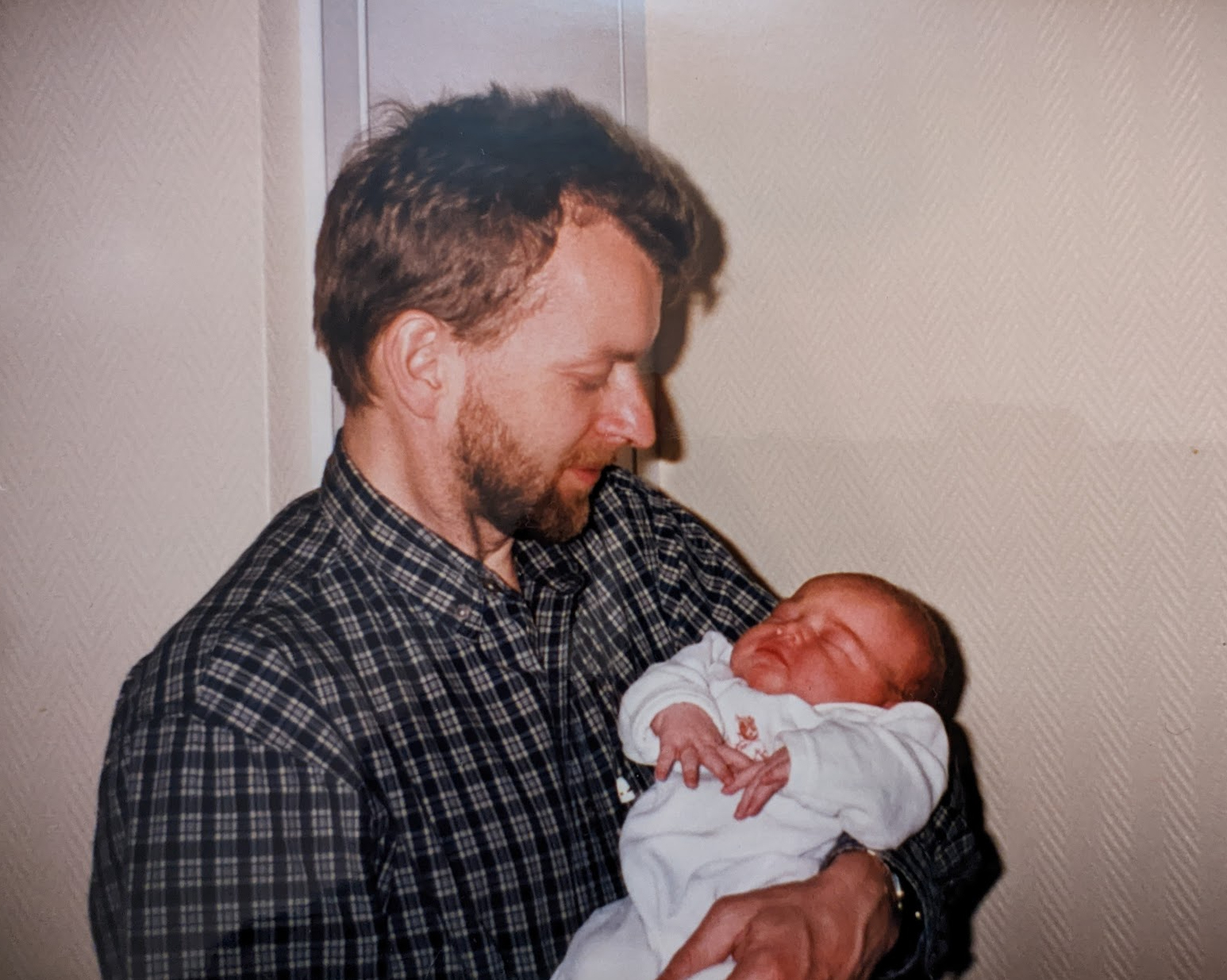

When my father died, so did a part of myself.
I don’t know how many times I have tried to write a post in the past weeks – and have never been able to finish. I think this is testimony to the complexity of emotions (new ones, at that) which have arisen as a result of my grief and the process of living through it, but tonight, I am forcing myself to write it through. So long as I have not, the emotions I cannot communicate are lingering, torturing, and devouring me.
Grief is by far the single most solitary and loneliest experience I have ever lived through. I grieve the unique relationship I had with my father alone.
Part of the reason why I have struggled to write these days is that the depth of the loneliness I feel is so all-encompassing in every aspect of my life that I have difficulty identifying what is a result of the solitude, and what is merely my own way of experiencing the world.
I have found that there is no longer a distinction – when my father died five months and six days ago, so did who I thought I was, what I thought my world was. I am now going through the process not only of accepting the death of my father, but of letting myself become a new person, in a new world, one in which my father is not at the foreground, but rather a kind of suspended being whose loss I feel in every breath I take.
On the Solitude of Grief
To be completely honest, the last month I have lived has been the worst of my life. Although I have continued to pursue my studies, see friends, and maintain a ‘healthy’ lifestyle (doing yoga, eating vegan foods, and whatever else capitalism tells you is the solution to being a healthy and stable adult in such a self-destructive system), there is something that has instilled within me that I am only beginning to let in and accept. That is the inescapable and irremediable solitude of grief.
My father and I had a bond which I have come to understand that few people have the chance to live in their lives. He understood me like no other and vice-versa, and I called him constantly to talk about my studies, share the projects I was newly engaging in, and discuss the existential anxieties I had about life he so keenly understood because he had lived through the exact same ones, he told me, at my age.
He is now dead. I have learned, and continue to learn, to connect with him in ways I hadn’t before – writing in a journal, speaking to him out loud when I am alone, and listening to music whose frequencies instigate in me an experience of uncontrollable catharsis. And yet each time I experience these forms of connection with my late father, I am also reminded of the fact that I feel these deeply because he is no longer here, and never will be, never again.
This is the solitary nature of grief.
The Solitude Only Hits Later
The first few months of my grieving were marked by total dissociation and a kind of jutting of an instinct of survival – I didn’t feel quite alive, and I think these effects were due to the kind of self-protection your body and mind instigate as a result of the PTSD of a sudden death.
Since January, I have been back in school, at my university. The months of January and February proved particularly difficult in terms of lack of motivation to get out of bed, severe fatigue, anxiety, and episodes of explosive emotions where I would just scream and cry for hours on end.
During these times, I had a difficult time seeing and connecting with people, and so because of that I felt lonely. But I assumed that once these severe effects diminished, I would be able to reconnect with people, go out more, and finally find a social life. I was unfortunately wrong.
The past month, since about mid-March, has been what I would see as the long, difficult, and deeply painful journey of understanding what my new reality is and accepting it. Although I no longer have episodes of the same intensity as before, what I have now rather is an ongoing and sinister weight that I carry with me wherever I go. I am faced with the fact that this is my life, my one life, in which I will never speak, be with, or see my father again.
No One Can Replace What You Shared with Your Loved One
This new form of grief, one that is the birth of the new person I am becoming, of the new life I am to have which I do not want, is going to last a long time. No amount of intellectual reflection or gratitude or meditation can expedite the strenuous and horrible process of detaching yourself from the one you loved so dearly in order to move on and find, once again, some form of meaning in life.
And herein lies the solitary nature of grief: this phase of slow and painful change is intimate to yourself. I wondered why sometimes, after speaking with close friends about what I was living through, and receiving their support, I felt worse afterwards. I came to understand recently that this was because no matter how hard I may try to formulate what I am living through into words, no one can truly understand it, as the only person who could is the person I grieve for.
What I am speaking of when I say that no one can understand is the actual, personal connection you had with the person that is unique to you. Of course, there are people, especially those who have lost a loved one, who can understand the symptoms and feelings of the process. But no amount of screaming your pain – as I often want to do – will alleviate the reality that you must grieve yourself, your world, your relationship. No one else can do it for you in any sort of way.
I have found myself mirroring this mental state of solitude into my material life. I talk less with my family, respond less to messages; I spend more time in my apartment alone (as my partner is away for several weeks), I reach out less. While I once saw these things as remedies for my pain, which they still are to a certain extent, I realize now that I must embark in the process by myself.
Feeling Alone May Bring You Closer to your Grief
Depressing as it is, I think it is a good sign. Something changes in you after living through a traumatic experience which suddenly reveals the raw, horrid, and unjust nature of life. Instead of spending my energy trying to reassure others that all is fine, which I did in part to convince myself that it was, I am allowing myself to spend my energy on feeling what I think is only the beginning of some of the worst moments of losing a person you built your life around.
In the case of losing a parent at 22, the solitude has also arisen by the loss of my safety net, of the person who I could always fall back to no matter what. Now, my horizon seems to be the need to take risks and learn new things – as is the norm for the period of young adult life – but without the possibility of being reassured, comforted, or given affirmation that things are alright. Left in a void of nothingness, we go forward, hoping something will line the grim horizon of the future with beauty and light.
Most, if not all, of testimonies I have read on grief share a similar experience, that the first months are far from being the hardest. Thanks to those testimonies I was expecting these months to become harder as they went, although I could never have imagined just how deep, and all-encompassing, these horrible feelings of sorrow and regret would permeate into every aspect of my life.
That’s just part of the deal. I tell myself that it is better I feel these things now, as they will have to be dealt with sometime in life.
Learning to Cherish the Solitude
This may seem counter-intuitive, but honestly, everything is in grief. As you learn to accept the person’s death, you struggle to let go; as you become happier, you feel yourself letting go of the emotional attachment you had to the person you loved.
This feeling of solitude, of depth, of inescapable loneliness is, I think, one of the most precious feelings you can feel, perhaps ever. It may be the case that your loneliness is testimony of the bond you had with the person you loved. It may be the case that things are more complicated: your solitude reflects the toxicity, or complicated nature, of a relationship that never found its peaceful moment of reconciliation.
No matter the situation, I believe that these feelings of solitude can be transformed into experiences of a deep connection with life that allows for us to feel, almost suddenly, the vastness of possibilities and facets of love available – coupled with the feeling that these may disappear in a matter of seconds.
In a way, I think that is the nature of profound grief, to live life deeply in honor of life which is lost.
Looking forward to writing soon.
Best,
Soline
My name is Soline Van de Moortele, and I would like to personally thank you for visiting my blog and reading my posts. I am dedicated to creating a series of blog posts on my personal experience with losing my father at 22, as well as provide a platform for other people to share their experience with grief. If you would like to contribute, please email : agrievinggirlblog@gmail.com

 A Grieving Girl's Blog
Leave a comment