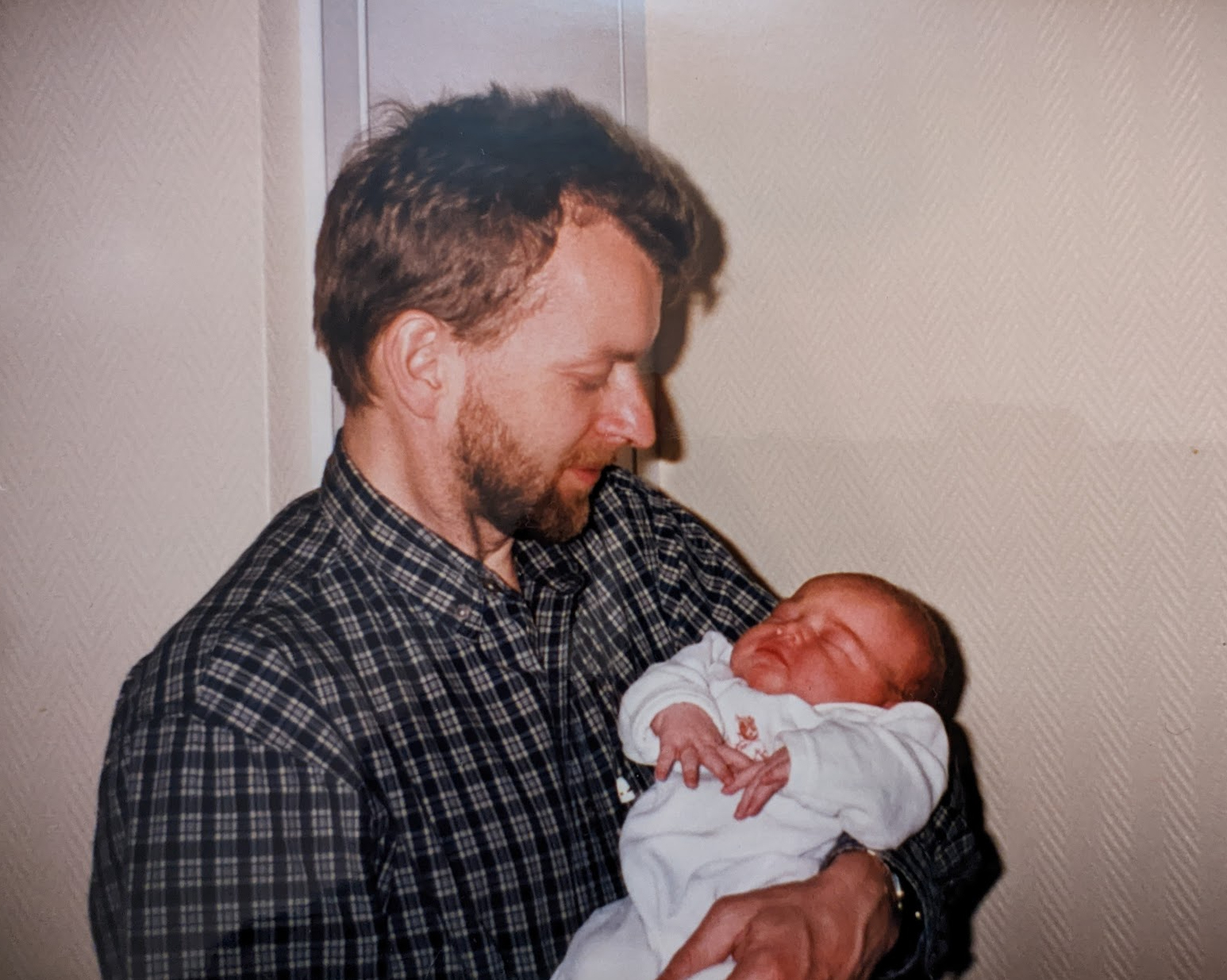

For some, Father’s Day is a day of memorial and a resurgence of grief.
When my father died seven and a half months ago from a terribly aggressive form of brain tumor, I could not have prepared myself for the whirlwind of complex emotions and mental states that would result. Even the feeling of sadness and depression, which I had experienced often throughout my life, emerged and continues to emerge in unfamiliar and unpredictable ways.
In honor of this ‘holiday,’ I wanted to dedicate a post on one of the unexpected sensations which have arisen in lieu of my father’s death, that of heartbreak. Although heartbreak is most often associated in romantic relationships, I recently discovered that the tortuous state of feeling emotionally broken into a million pieces after having someone violently ripped away from one’s life can be experienced in any relationship.
Feeling this brokenness, and the loneliness that arises when you need to put the pieces back together without the presence of the person you loved most, has been an extremely difficult one to navigate. Yet as time goes on and the grief becomes less of a constant battle and rather an integral part of who I am, I can now take a step back and understand the role of heartbreak in grief, specifically of a child grieving their parents’ premature death.
When You Lose a Foundation in Your Life
For those of us lucky enough to have grown up with loving parents, it is difficult to imagine a life without the presence of those who have cared, nurtured, and protected us for so long. Conceptually we may learn from a young age that everyone dies, even our parents – yet on an affective level, the worry typically does not come about until later in life, when the dependence is no longer so prominent.
Part of the violence of grieving a parent at a young age is the sudden destabilization of one’s entire life. When I lost my dad, suddenly every decision I made, worry I experienced, or question I had became instances of anxiety and deep stress as I felt that it would be impossible to act the right way without being able to have the support of my father.
And the world doesn’t slow down when they die. Everything that surrounds you becomes terrifying and alien. After living through a traumatic loss, you need to rediscover the world: you are plunged into childhood fears of being lost and alone, yet this time it is with the certitude that you will not be found.
My father died when I was 22. I think I can say with some level of certainty that this is a critical and difficult age for many people. It is a transitional period where you begin to ask yourself questions on your desires and ambitions in life, where you would like to go, how you should orient yourself to attain those things.
Losing my father, who was at once my best friend, my mentor, and the person who best understood both my personal and academic tendencies, felt like a blow to any kind of plan I could make of my life. How might I be certain, being so young, of any choice regarding my future without his validation and insight?
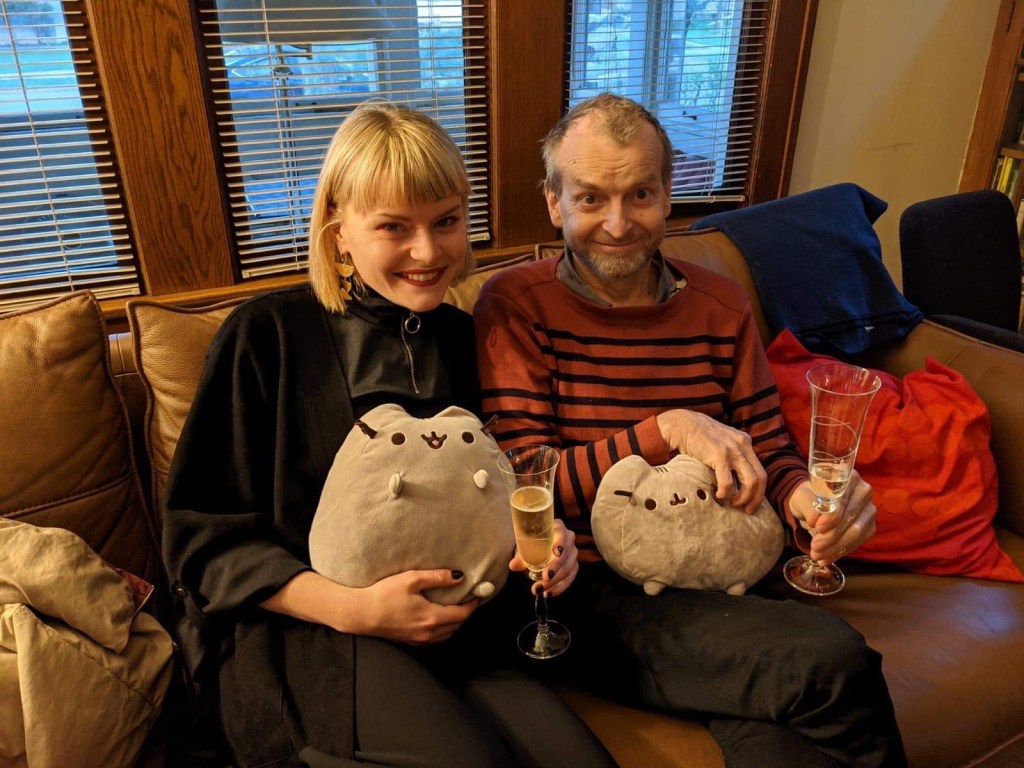
The Painful Lesson that Even Love Couldn’t Save Them from Dying
One of the many undesired results of the deep grief I have experienced is the terrible feeling of betrayal by life. I could not have loved my father more, and he was so full of life and had such a deep passion for living – and yet he died nonetheless?
It is not sufficient to understand the ‘why’ in terms of biology. Of course, from a purely rational standpoint, his death is the result of cancer, something which exists beyond justice in any form. It is just our predisposition as biological agents to fall to these ills, and this will forever be the case, so long as we exist.
But the real pain lies in the incomprehensibility of the situation. I have noticed that over time, as I have adapted to this situation and to my new life, the weight that has been lifted has not been through the acceptance of the fact of his death. It is much deeper, I have found… it is rather that I have accepted what will forever remain unacceptable. This is something I now have begun to carry with me, that which has touched the limits of rationality.
I think this is where the deepest heartbreak is felt. And I understand how prolonged grief can turn people so cynical and cold. If my love could not save my father from dying, and save the trauma from unfolding, what good is it to invest any energy into caring and loving a person if there is the risk to live such a tragedy all over again?
Thoughts like these have quieted in my mind, luckily. At times, I still unfortunately suffer from that bitter aftertaste which arises when people talk about their living parents and happy families which you compare yourself to. Comparison, jealousy, and envy are normal aspects of grief, though they do help alleviate the pain. As I grow to accept my lot, rather than linger in the feeling that things could have been otherwise (as that is not possible), these thoughts become less and less frequent.
Re-learning to Receive, Give, and Trust Love
It isn’t easy to love after losing someone. For a long time my emotions were at a standstill and I felt a constant dissociation from the passion and excitement that at one time fueled so much of my life.
What is so insidious with grief is that months after the person’s death, undesired effects continue to show up in your life. Nearly half a year after my father died I returned to my childhood home to spend a few weeks with my mother. It was such a heavy and difficult experience that upon my return to Montreal in May, I experienced feelings of disconnection with my partner and family, I wanted to isolate myself from everything I was comfortable with, and I felt completely out of touch with myself.
It was only after I started communicating these things to others that things started to get better. The draining weight of loneliness can be alleviated, even if only a little bit, by sharing how you feel with people you trust. I also began to identify how these weird inclinations were symptoms of my grief, rather than facts about who I am.
After identifying this I began to let go of the pressure I put myself through, and learned to let go of the desire to control everything in my life – something which is one of the most beautiful things I have learned to do through this grieving process.
It has now been close to a month and a half since returning to Minneapolis, and rarely have I felt so at peace in my life. I have learned to connect with myself in ways that I hadn’t ever before. I feel myself growing and becoming the new person this experience has led me to be.
Life no longer feels like an uphill battle. I can feel that I can finally love again.
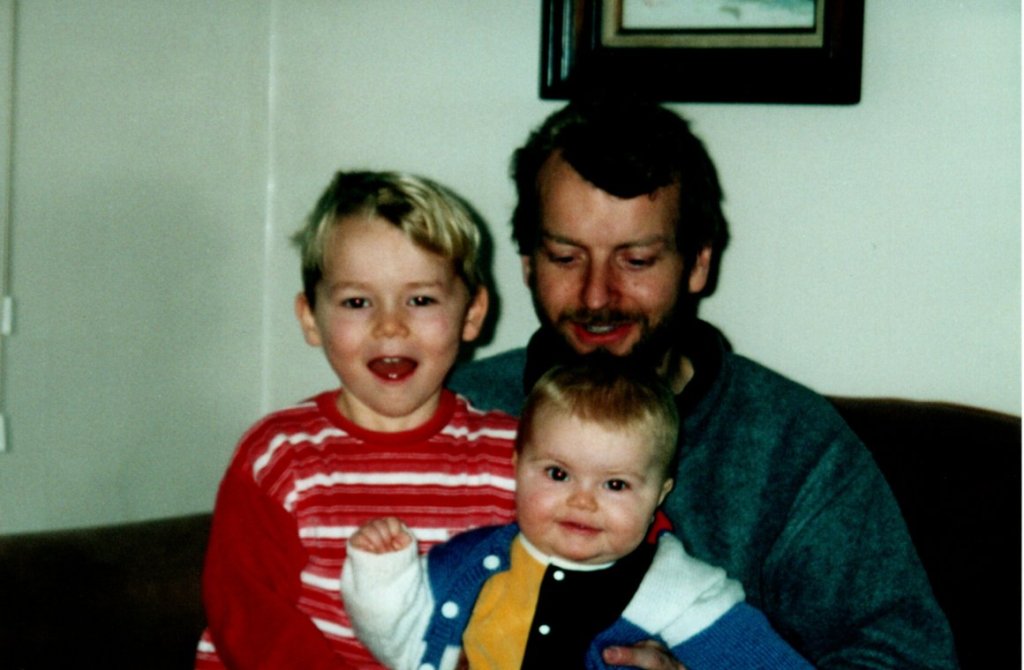
Connecting with your Parent Through Other Means
Although it may be cheesy and appear futile at first, it is true that in death, you learn to connect with your loved ones in new ways. And in my case, these ways were to a certain degree unexpected.
Since the day of my father’s death I have maintained a journal where I write to him. This has been my personal way to most clearly talk to him and feel that I am maintaining my bond with him.
Yet recently, as I become more at peace with the situation and less dominated by the symptoms of grief, the frequency at which I write to him, talk to him, and even think about him, has decreased. While this was terrifying for me at first to realize – it feels like you are losing the person – I have realized that it is also, in a way, due to the fact that I feel like I have integrated his death as a part of my very personhood.
You learn to carry these things with you. Not a day goes by where I don’t go through the images of his final breath and certain childhood memories that have played nonstop for the past year. Yet I no longer seek to stay attached with the past as a source of comfort. Now, I look forward, acting in accordance with the trauma which will seep into my lived experiences until the day I die.
Perhaps this connection with my father is even stronger than it was when he was alive. Little can be shared so intimately than love and loss, and understanding this has been essential for my ability to trust in love altogether.
If anyone else is struggling with the loss of losing their father, I am sending you an extra bit of love on this difficult day.
Soline

 A Grieving Girl's Blog
Leave a comment