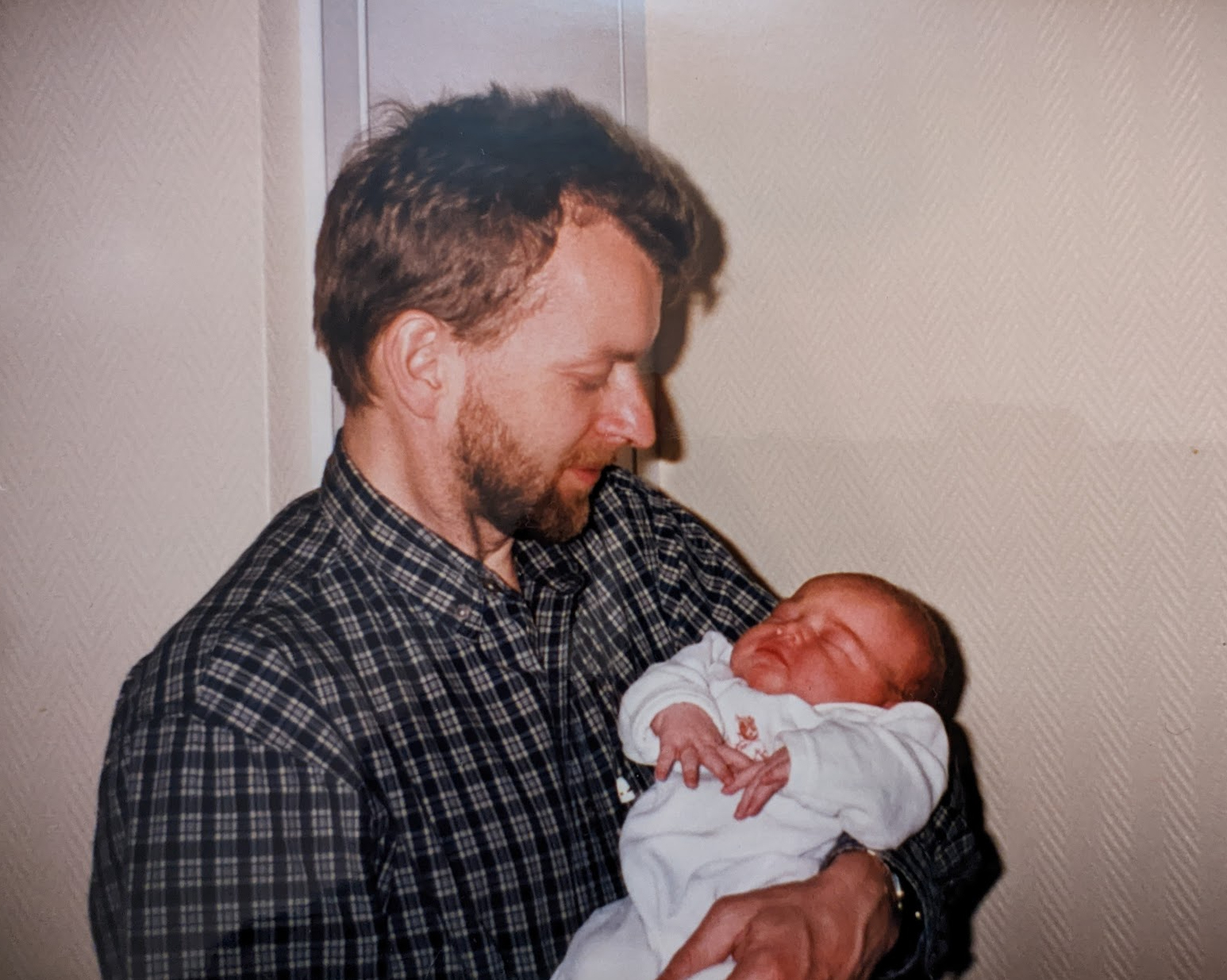
Three years since his passing, and it seems like I can no longer cry. Like his death has become so enmeshed within my daily life, rather than some alien event imposing itself on my otherwise normal reality, that I can no longer be sad about it. It is there, it just is. And this is what, I believe, it means to move on.
The notion of guilt in grief is a common one. We often hear people recount the pain they feel of enjoying life without the one they love, or the pain wrenching feeling of experiencing new memories which the person will not be able to have. They are dead, and while they accompany us in our lives beyond their last breath, they do not share our life with us anymore.
This was one of those things I was anticipating in my grief, but couldn’t fully imagine until I had actually experienced it. The memories fade, the pain is less violent. Time works in strange ways, and dulls the edges that were so sharp in those first years. And yet, there are days, like today, when I miss the pain, the flashbacks, and feeling of my heart being literally twisted in two. I miss the feeling of his absence being something exceptional, rather than the norm.
When You Begin to Forget
I can’t remember when it is I began to forget him. But I first noticed last year, on his 66th birthday, when it didn’t hit me as hard as before. I had spent a winter feeling the pain of the grief more intensely than at any other time and it seems like it somehow purged the worst of the pain.
The memories have become less vivid. I cannot remember the details of his face in the same way. The wrinkles, the eyebrows, the lips have all become more blurry when I think back to one of the people I loved most. When I see photos of him, it feels all more distant than ever before.
This doesn’t mean that I have stopped thinking about him, however. In fact, I believe I think about him just as much, perhaps even more so. When he was alive, I didn’t need to think about what he would think, or say; I would just ask him. Now, it is a constant dialogue I seek to nourish, to keep his guidance alive as I continue into adulthood with one less parent.

What is Lost and What is Found
Despite longing for the vivacity of the memories of my father, I have never been happier since his passing. The state of ‘prolonged grief,’ one in which a person continues to be completely consumed by their grief for years following their loved one’s death, can be a deeply debilitating state. There is an act of letting go that needs to take place in order to find happiness again, I believe.
This act of letting go is namely the radical acceptance that this is your life now, fully and undeniably. In those first months or years after the person is gone, it seems so surreal, so unnatural, that your mind cannot quite grasp what it is that has taken place. But the mind and body then become used to it by a process of habituation. I think anyone who has lived through this process of habituation knows also the desire to resist it, to not accept the tragedy.
Yet when we accept the loss we are also able to give space for new things. This may all seem very cheesy, but as I’ve said previously, a lot of grief is cheesy. But it’s also true. For so long my life was clouded by the darkness of grief and consumed all of my energy. Any joy I could feel at some moments was quickly turned into a feeling of guilt or a reminder of what I’d lost.
Today, three years after his passing, I have found passion in life again. It did take many existential crises, moving abroad to leave everything behind, and dropping out of a master’s program, but I finally have found something which pulls me towards the future again. It turns out this was anthropology.
Most importantly, my father has not become more distant since November 5th, 2022, when he passed away. His life and his death have deeply shaped the person I am today and the way I live in the world. No one will ever take this away from me.
Finding Ways to Reconnect
I used to regularly cry and have spontaneous moments when I would think about my father and feel a connection with him. Today, that feels more difficult to tap into, and I don’t want to force myself to be sad in any way. Instead, what I do now is more symbolic grieving: I dedicate a day, an event, or a place to him and mobilize it as a means to reflect and feel connected.
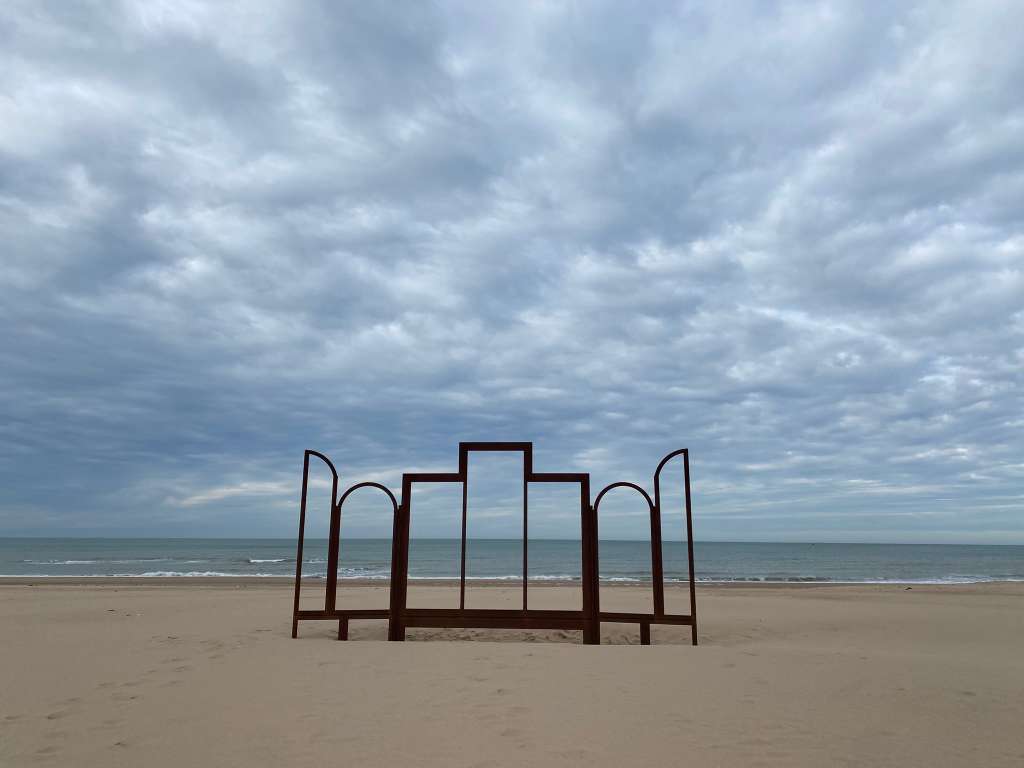
What I have done this year and the previous is go spend a day in the Belgian coastal town of Oostende. I walk by the sea, enjoy the tacky aesthetic of seaside tourist attractions closed in the winter months, and relish in the urban nostalgia of the glory this city once had. I know my father would have appreciated these aspects as well, and he also came to these beaches during his childhood summers.
Writing has also been of huge importance to me. It has always been a medium by which I can identify and dissect difficult emotions and experiences. The process of writing is perhaps the most intimate experience I have with myself, and it is something which has transformed my experience of grief. Sometimes, I am better able to find my father’s voice between the lines of my notebooks than in my thoughts.
Perhaps I have not sufficiently dwelled on the question of guilt, but I think it’s because guilt is often indicative of something else that is going on. It is not about whether it is truly wrong to enjoy things or live your life after your loved one has gone: it is about what it means to begin and accept to live a life without them.


 A Grieving Girl's Blog
Leave a comment