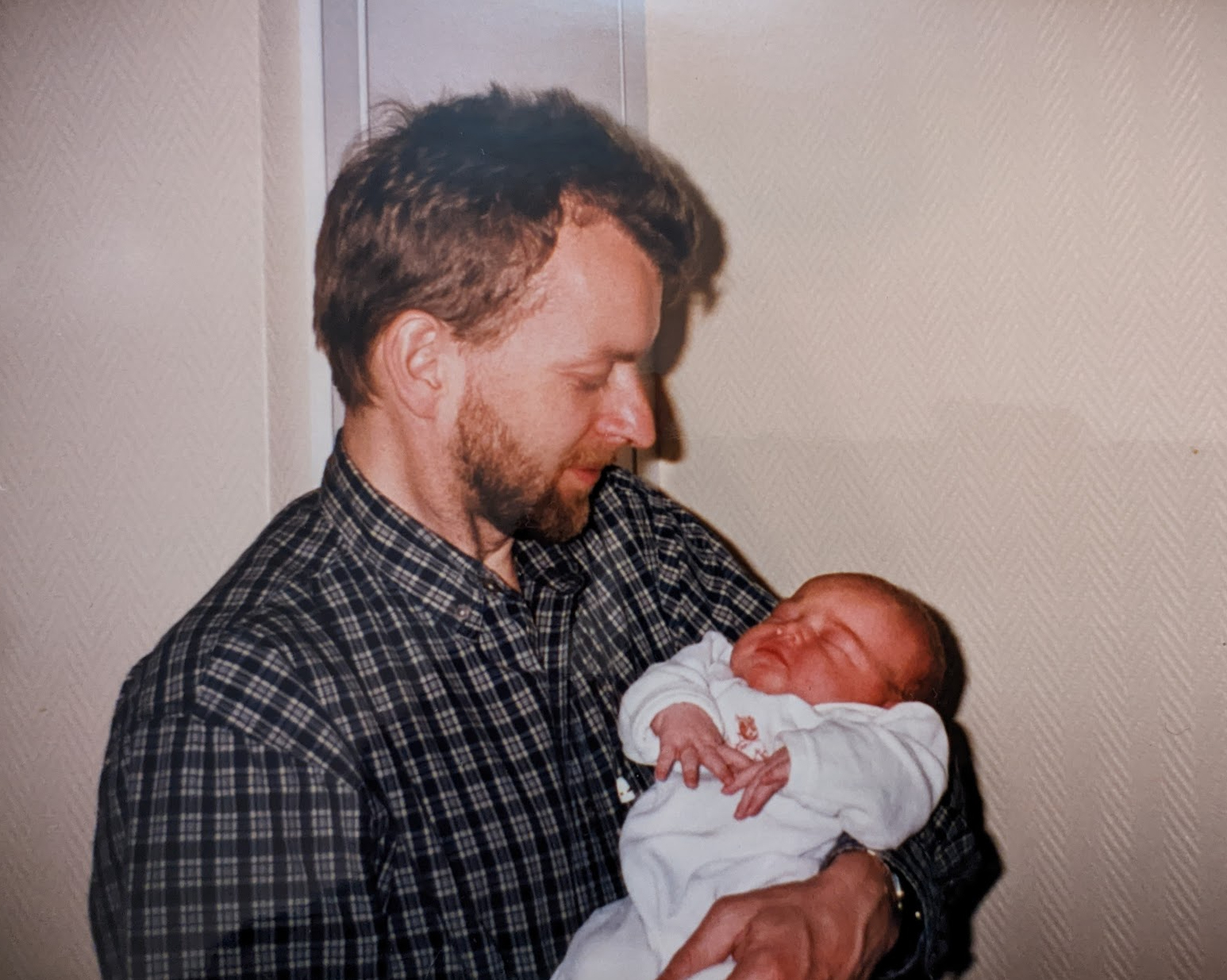
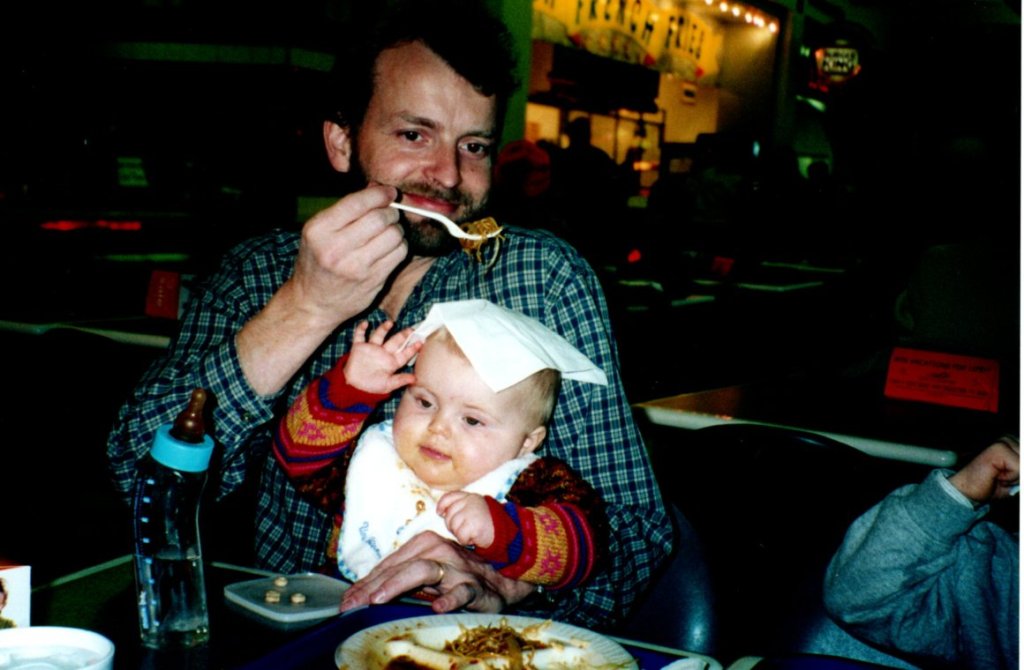
It has been nearly seven months since I watched my father pass away. And at the six-month mark, half an orbit around the sun, I suddenly felt something I think all people in deep grief fear: I felt for the first time that I was becoming used to my father’s absence.
A month and a half since my lost post and I am still not sure what to write.
In this entry, I am just looking to share some reflections on the kind of transition I have been living through the past month and the variegated effects it has had on my life, for better or for worse.
On the Pain of Becoming Used to the Death, and Absence, of Your Loved one
Basic psychology and minimal reflection onto our lives teaches us that we are cyclical creatures whose lives revolve around some minimal amount of routines, habits, and lived cycles. These extend from basic biological necessities, such as sleeping and eating at certain times of the night or day, to work and social habits, and further to the things we think about.
I think there is a common assumption made that the more a person is able to ‘re-adapt’ to commonplace reality and society after a traumatic event, the more it is evident that the person is progressing and that things are becoming easier. For myself, this has been far from the case.
Becoming used to my father’s absence has been by far one of the most violent and difficult experiences I have had to live through since the beginning of my grief. Up until the six-month point, all of my days had been molded by the most immediate effects of PTSD, ranging from panic attacks and bouts of mania to lack of concentration and constant fatigue.
For the past month, the most severe of these symptoms have diminished in intensity, leaving room for deeper, most subtle, and more difficult effects of grief to take place. Whereas the PTSD leaves you in a constant fight-or-flight mode of survival, symptoms of prolonged grief are all embedded in the torturous yet inevitable process of becoming used to a life with the person you loved most in this world.
On the Pain of Becoming Used to a Life Without Your Loved One
I fail to find the words to describe the pain it is to wake up everyday knowing you will never see someone so fundamental to your life ever again. At 23, I am only beginning to discover adulthood, and there are so many steps in my life my father will never see and so many experiences I will never get to share with him, all because of his biological disposition to have a cancer we do not yet know how to cure.
Surprisingly, I actually feel closer to my father now than ever since his passing, I think. This is a sad reality as it means that now he exists in my spirit through his death. In other words, I have now begun to accept my father as a person who is no longer alive, and although this does not affect the essence of his being – his humor, personality, and passions – it still remains that to move in my grief and in my life I must accept that he is now dead. That is a very, very difficult task.
But life does go on, and it seems that I have incorporated, to some degree, the death of my father as part of my very ontology, my very being, rather than being a separate and isolated object my instincts wish to refute. It feels as though a new layer of skin grew on me, composed of cells of my father’s death, cells which will be for the rest of my own life an integral part of my organism.
Death Continues to Emerge in Unexpected Ways in my Life – as Does my Father
Death of a loved one, especially one who was part of your everyday experience, does not begin and end with the person’s death itself. In fact, I have found that as time goes on, I develop a more intimate, raw, and real experience with my father’s death.
For myself, I think that this can be explained because my body is only now beginning to catch up with all that has happened in my mind. To better explain, it is one thing to analyze, intellectualize, and reflect discursively on an event, and another to experience it on a corporeal level.
Living in Montreal, I was used to not seeing my parents for months at a time. Of course, we would speak on the phone, but it is as if now, six months later, my body is only starting to feel that it has been excessively long since I last spoke to my father. Now, he has become the only person I wish to speak to, and I have to constantly swallow down my desire to call or text him at every minute of the day in order to survive.
These are the things which are difficult to communicate to others.
I am now letting go of that desire to constantly communicate and find the words to express what I am feeling. Of course, as I write this now, that is what I am doing, but there is something in accepting that no one will ever truly understand intimate, personal, and unique pain you are living in your loss, is an inevitable part of the grieving process. You just have to do it.
Learning to Connect and Carry Your Loved One’s Presence in New Way
Lately I have found myself – perhaps both consciously and unconsciously – becoming more similar to my father and integrating shared interests more actively in my day-to-day life. I have been following online courses on psychology, watching documentaries on Ancient Egypt (which we did obsessively when I was a child), and rekindling an interest in academic studies (given that he was a scientist and intellectual we deeply connected over academic matters).
And these new practices are themselves invested with that same melancholia I noted above. But it is a beautiful one. It is a deeply personal one, which no one may ever take away from me, as it is integrated in my very being as I come to accept my father’s death.
I think this is a good technique to consider when dealing with grief, namely, finding practical and enriching activities or interests brings you closer to the essence of the person you lost. By extension, this may also nourish your mind and find, once again, a desire to be active in life, as that is something commonly lost to those experiencing deep grief.
The Solitude of Grief is Exhausting, but You are Not Alone
Little by little, surviving becomes more bearable, though not any less painful. In fact, it seems that the pain just becomes part of the horizon of lived experience.
To all of those grieving, please know that you are not alone. Those moments of deep solitude are shared with others through solidarity.
In time things will get better, even in the absence of those we love. That is perhaps the most difficult part of it all.
Talk soon,
Soline


Leave a Reply