Pour la version française de ce post, suivez ce lien.
All of us who grieve know how difficult the days – sometimes weeks – preceding and following an anniversary, birthday, or special holiday (such as ‘father’s day’ in my case) can be. It may be the case that you mysteriously wake up one morning, feeling tense, irritable, particularly emotional, without understanding the origin of this distress.
Until it hits you: his birthday is coming up. March 6th. The days go by, nearing that yearly blow of emptiness.
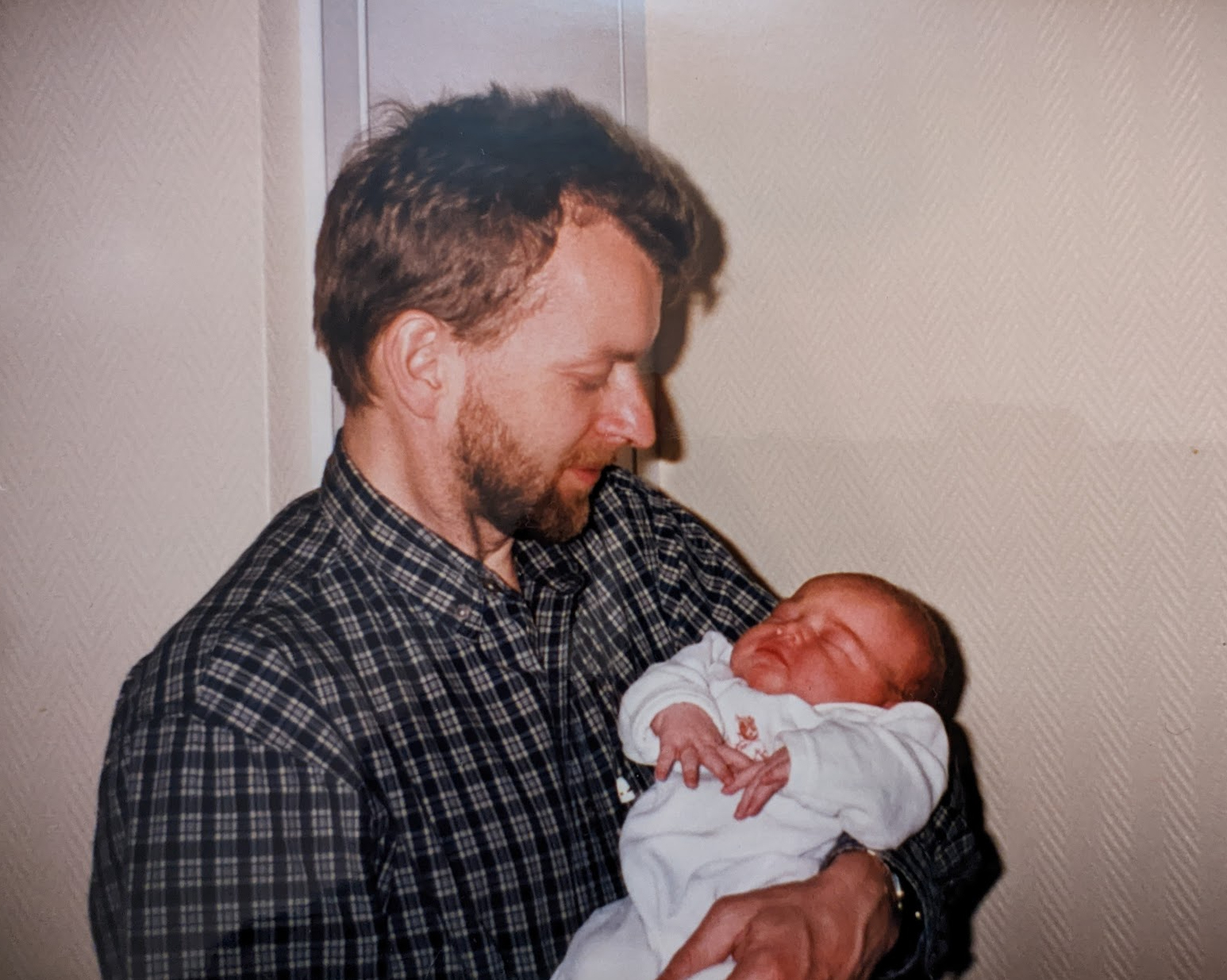
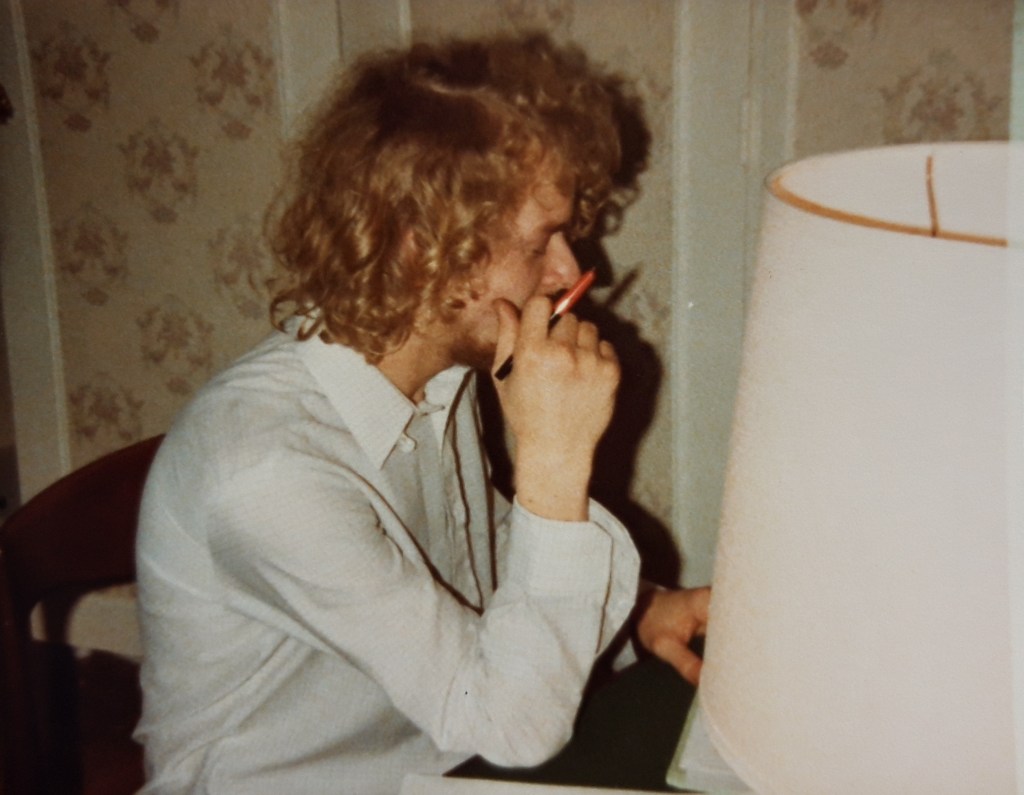
Today is my father’s birthday. He would have turned 66. This is his third birthday since he died in November, 2022.
Initially, I wrote a blog post about what it is to lose yourself in grief, especially in your twenties (which I will post next week). But during a mass my choir sang today, I realized that it didn’t feel right to write about my existential quarter-of-a-century crisis on his birthday. I wanted to write about him.
So, I decided to write about death, and where our loved ones go when they die.
I don’t mean this on a metaphysical or theological basis – I am not even religious and do not have any beliefs concerning if the soul emerges somewhere after death. Rather, I am interested in understanding how the person we loved is carried within ourselves, and our world, once they die. And this is something of a process.
The ‘place’ my father holds has changed from the first months, even the first year, and as time goes it will surely keep changing. It even varies on a daily basis – some days his presence is deniable, others I wake up with a hole in my stomach, unable to feel him close. That’s just how it is.
Is it true that your loved one always stays with you?
I heard this a lot after my father died. Your father will always be with you. I hated hearing that, I wanted to scream at people that it obviously wasn’t the case, otherwise there wouldn’t be the pity in their voice and sorrow in their eyes. My father is no longer here – isn’t that wherein lies the tragedy?
Yes, it is. When you truly and deeply love someone, it is not love towards the image you make of them in your head. It is the space they take up in the world and their voice and humor and laughter and behavior and ethics and responses.
The image you have of them in your mind is not truly the person they are. You don’t see them growing older, making mistakes, learning from challenges. You can’t eat with them, share a moment breathing in the same air, hear their reassuring voice on the phone when you feel alone and scared. That is what you lose, and forever. There is no point denying it.
However, I have never felt that my father has totally left me. And he feels very close to me, perhaps more so than before because I now carry him with me everywhere I go, in everything I do. When I do something he would have enjoyed doing, I feel him there. And he gave me life, taught me to speak, and played with me for endless hours. His life is embedded within my own.
What changes, really?
It is hard to describe absence when it fills up your entire life. It is a deeply isolating experience. And as time goes on, it becomes harder to remember what life without this constant and pervasive absence lining your horizon was.
For the past two and a half years, it has felt like there is a part of me that I can no longer externalize. The part of me that existed through my interactions and relationship with my father can only exist for myself now. It is very destabilizing. I still have moments of frustrated urges to speak to him, only him, hear his voice.
The worst part has been learning to accept that I could have had a life with him still here. Or maybe everything in this world is already predetermined and there was no chance that he ever could have not gotten cancer, not lived through those torturous treatments, not died. But if things are not predetermined, then it could have happened, and everything in life would have been better. Everything.
There’s no way of getting around that reality, that it sucks, there is no deep moral to be drawn from living this tragedy. It should not have happened, he should still be here, that’s the end of it. It is difficult for people to hear this, they want to comfort you, tell you that you can’t know what it would have been like.
Sitting with the silence
I am still learning to accept this new reality. But it feels a lot softer now, and in a lot of ways, a lot easier. These moments of missing him have become an underlying constant to my reality, rather than a violent slap in the face that could leave me in anguish for days on end. Those moments still occur – but they are less frequent, and less intense.
I try to appreciate moments of silence more. In fact, I need silence more than I used to. I can feel now that too much clutter saturates my mind – I always need some days to be a bit more silent than others. It’s all part of this slow and ongoing process that is grief.
Lastly, sitting in silence has also allowed for me to begin this process of ‘re-discovering’ myself since losing my father. I am far from being the girl I once was, and hard as it is to see that I have lost her in some ways, new parts of me are slowly emerging and growing stronger as time goes on. But I will write more on that next week.
For the time being: Joyeux anniversaire, Papa. ❤


 A Grieving Girl's Blog
Leave a reply to vinglis Cancel reply